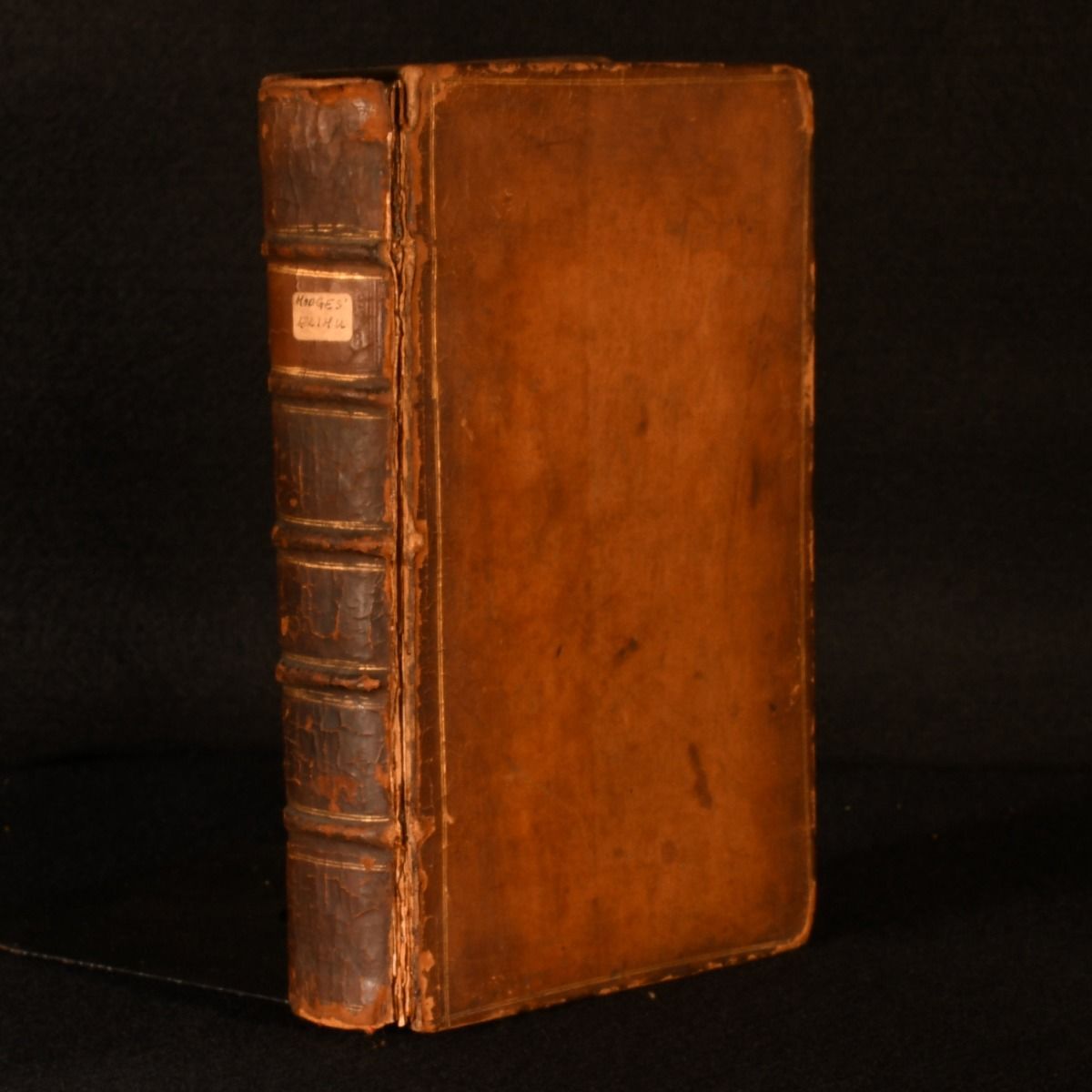
Walter Hodges — Elihu; or, an Enquiry Into the Principal Scope and Design of the Book of Job
London, James Hodges , 1751 . Leather. A very scarce copy of the second edition of Hodges"s distinctive interpretation of Job, arguing that Elihu represents the pre-incarnate Christ. In a contemporary full calf binding. The front endpapers have been renewed, with the new papers laid down over the originals. Front board fully detached with title and endpapers, but present. The second edition, following the first edition of 1750. A theological interpretation of the Book of Job, examining its principal purpose and the significance of Elihu within its narrative. Walter Hodges (1695-1757) was an English clergyman, theologian and academic who served as Provost of Oriel College, Oxford, from 1727 until his death. Hodges advances the unusual argument that Elihu represents the Son of God, interpreting the figure as a pre-incarnate Christ whose intervention illuminates the book"s treatment of suffering, divine justice and salvation. An unusual biblical exegesis, presenting a provocative Christological interpretation of one of the Old Testament"s most complex books. ESTC No.: T111964. In a contemporary full calf binding. Externally, worn. Front board fully detached with title and endpapers, but present. Slight rubbing and scuffing to calf with bumping and chipping to the extremities. Unsuccessful amateur repairs made to hinge at title page. Rear hinge cracked but firm. Small shelf label to the spine. The front endpapers have been renewed and laid down over the originals. Glue discolouration with residue to the verso of the front free endpaper with some soiling. Scattered spotting and soiling to the rear free endpapers, with a very small shelf annotation. Internally, text block generally firmly bound with the exception of title page. Small contemporary ownership inscription to the head of the title page. Slight cockling to leaves. Pages generally bright and clean if slightly age toned with the odd light spot, heavier to first and last few leaves. Good Only . Ill.: None. Good Only .