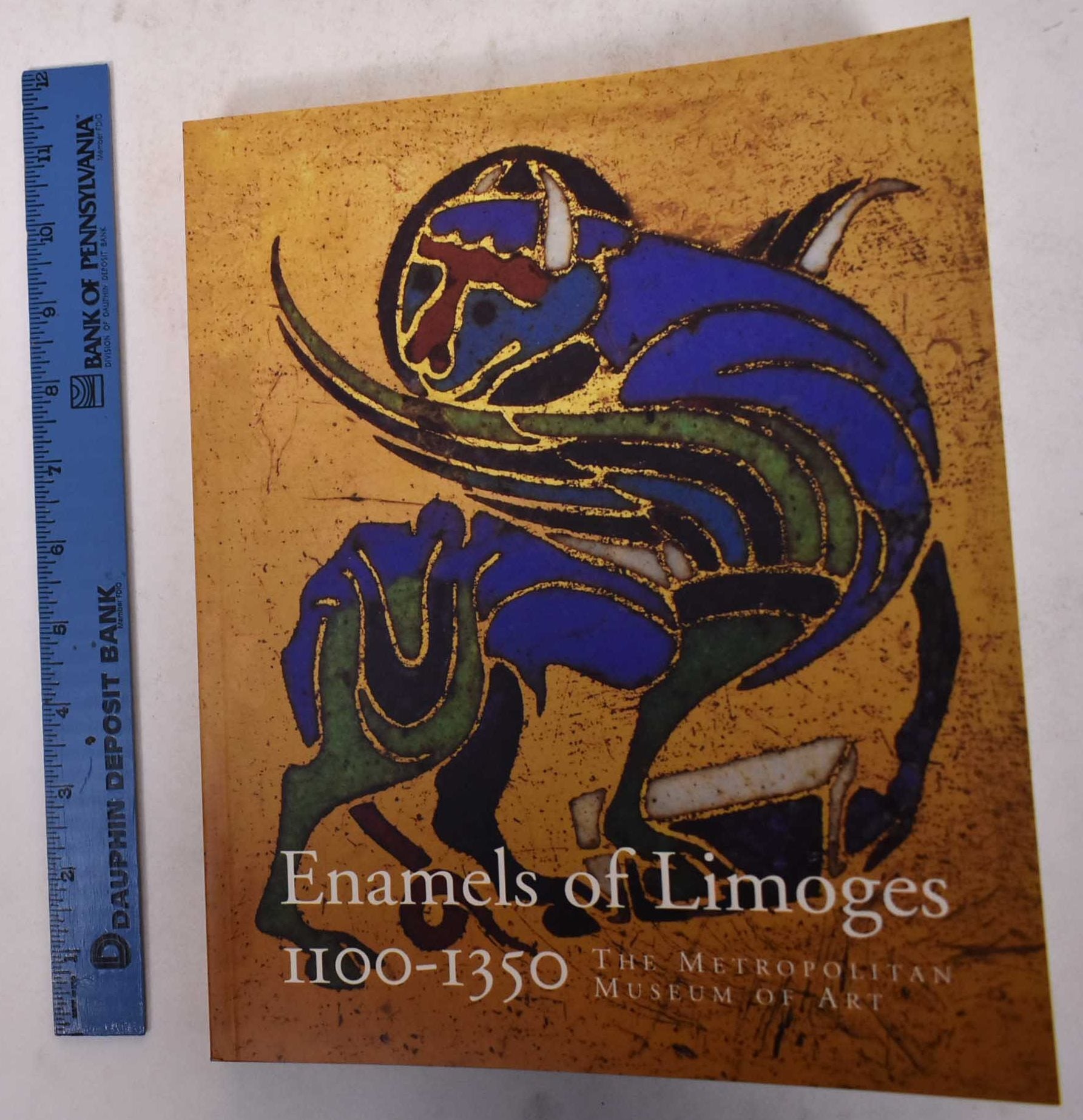
O'Neill, John P. (editor) — Enamels of Limoges 1100-1350
New York, Metropolitan Museum of Art, 1996. Softcover. Light brown illustrated wraps, white lettering on spine. 478 pp. 157 color plates, numerous bw illustrations. This publication is issued in conjunction with Enamels of Limoges, 1100-1350, held at the Musée du Louvre, Paris, October 23, 1995-January 22, 1996, and at the Metropolitan Museum of Art, New York, March 5-June 16, 1996." Includes bibliographical references (pages 451-468) and index. 157 works, thoroughly annotated. With preliminary essays, 7 tables of information, and an extensive bibliography. Contents as follows: Transatlantic crossings of the art of Limoges / Marie-Madeleine Gauthier -- Limousin and Limoges in the twelfth and thirteenth centuries / Bernadette Barrière -- Religious life in the Limousin in the twelfth and thirteenth centuries / Dom Jean Becquet -- Beginnings and evolution of the Oeuvre de limoges / Elisabeth Taburet-Delahaye -- Opus lemovicense: the taste for and diffusion of Limousin enamels / Barbara Drake Boehm -- Techniques and materials in Limoges enamels / Isabelle Biron, Pete Dandridge, Mark T. Wypyski -- Birth of enameling in Acquitaine (1100-1160) -- Opus lemovicense and the creation of a European taste (1160-1190) -- Abbey of Grandmont (12th-13th century) / Jean-René Gaborit -- Limoges in transition (1190-1230) -- Last flowering (1240-1320) / Michel Pastoureau -- Gilded images : sacred and funerary sculptures (13th-14th century) / Béatrice de Chancel-Bardelot -- Tombs of Limoges Work / Béatrice de Chancel-Bardelot -- Techiniques and materials in Limoges enamels / Isabelle Biron, Pete Dandridge, Mark T. Wypyski. Limoges enamels, the richest surviving corpus of medieval metalwork, were renowned throughout Europe in the Middle Ages. Yet today they are little known outside academic circles. The works of Limoges were created for important ecclesiastical and royal patrons. The wealth of enameling preserved from the Treasury of the abbey of Grandmont, just outside Limoges, is due chiefly to the Plantagenet patronage of Henry II and his queen, Eleanor of Aquitaine. Enamels created during their reign resonate with the elegant style of the court, and the dramatic history of Henry's monarchy is evoked by such works as the "Reliquary of Saint Thomas Becket. VG (may have owner's writing on first page, may have minor shelf wear at corners) .